

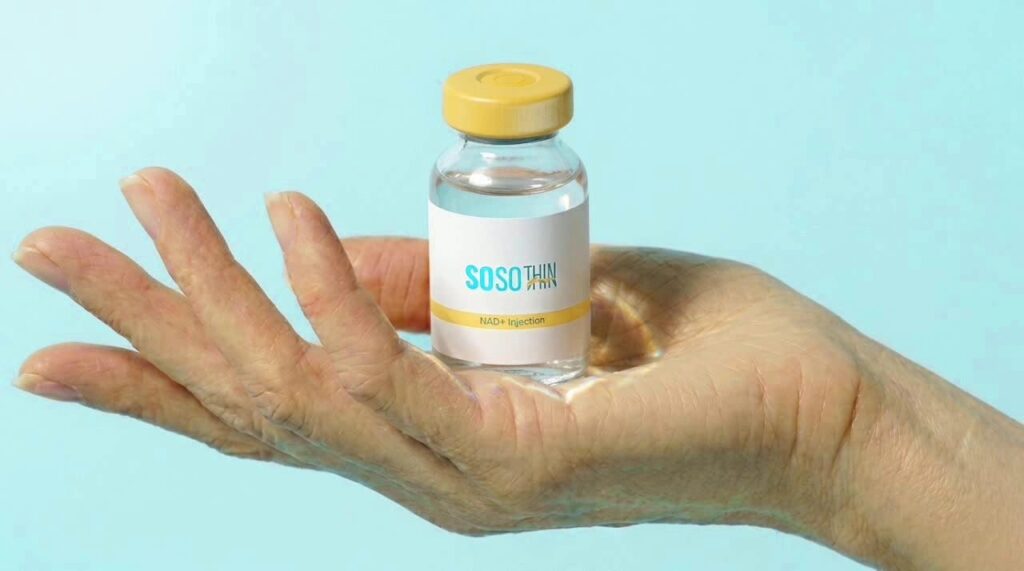
It’s not burnout. It’s not age. It’s your cells — and yes, there’s something you can do about it.
You’re sleeping enough. You’re eating well — or at least, well enough. You’ve tried the supplements, the adaptogens, the magnesium before bed. And yet somewhere the energy just….. changed. Not dramatically, nor in a way that shows up on any test. Just a baseline flatness that no amount of sleep or green juice seems to touch.
Here’s what nobody has probably told you: that feeling has a name. It’s called NAD+ depletion, and it is one of the most measurable, well-documented, and — this is the good part — addressable processes in the biology of aging. It is not a personality flaw. It is not burnout. It is your cells running low on the one thing they need most to produce energy. And by the time most women are in their mid-40s, their NAD+ levels are roughly half what they were at 20.
Half. Not a little lower. Half.
“NAD+ is essentially your cells’ power currency. Without enough of it, everything — energy, focus, recovery, even how you look — starts to run at half capacity.”
Okay, But What Actually Is NAD+?
NAD+ stands for nicotinamide adenine dinucleotide, and if you only remember one thing about it, remember this: it is the molecule your mitochondria use to turn food into energy. Every cell in your body runs on ATP — think of it as the actual fuel your body uses for everything from thinking clearly to recovering from a workout to keeping your skin plump. NAD+ is what your mitochondria need to make that fuel.
When NAD+ levels are naturally high — as they are when you’re young — your cells are efficient little energy factories. When NAD+ levels drop, those same cells start running sluggishly. They can still function, but not at full capacity. And “not at full capacity” turns out to feel like: tired for no reason, foggy in meetings you used to lead, taking longer to recover from exercise, noticing your skin is doing something strange and unwelcome.
NAD+ also activates a class of proteins called sirtuins — sometimes called longevity proteins because of the role they play in DNA repair, inflammation regulation, and cellular maintenance. Think of sirtuins as your body’s internal housekeeping crew. NAD+ is what keeps them employed. When NAD+ drops, the crew goes home, and the cellular maintenance starts slipping.
Why Does It Drop in the First Place?
Honestly? A lot of reasons, and most of them are not your fault. The baseline decline is biological — it begins in your 30s and accelerates through perimenopause. But it’s compounded by things like chronic stress, disrupted sleep, alcohol, a high-sugar diet, and the kind of low-grade inflammation that perimenopausal hormonal shifts tend to produce. By the time most women are actively noticing the symptoms, the decline has been underway for years.
The reason it hits so hard in the 40s and 50s specifically is that it overlaps with declining estrogen, which has its own effects on energy, metabolism, and mood. The two processes compound each other. Your hormones are shifting, your cellular energy production is declining, and the standard medical response is often a panel of bloodwork that comes back normal followed by a suggestion to exercise more and manage your stress. Which is fine advice. It just doesn’t address what’s actually happening at the cellular level.
“Your bloodwork comes back normal. You drive home knowing nothing feels normal. Both things are true — and NAD+ depletion is part of the reason why.”
What Fixing It Actually Looks Like
There are two main ways to address NAD+ depletion: oral supplementation with NAD+ precursors, and intravenous NAD+ therapy. Both work. They work differently, and for different patients one will make more sense than the other.
Oral supplementation uses molecules called NR (nicotinamide riboside) or NMN (nicotinamide mononucleotide) — precursors that your body converts into NAD+ once absorbed. The research here is solid: multiple clinical trials have shown that NR and NMN reliably raise NAD+ levels in the blood, and studies have documented improvements in muscle insulin sensitivity, cognitive function, and energy in middle-aged adults following consistent supplementation. It takes longer to feel — weeks rather than days — but it’s accessible, easy to integrate into a daily routine, and the safety profile is excellent.
Injectable NAD+ therapy delivers the molecule directly into your bloodstream, bypassing the digestive system entirely. The result is faster, more pronounced, and reported by most patients as genuinely noticeable in a way that oral supplementation sometimes isn’t — particularly for cognitive clarity and energy. Most women who try it feel it.
And What Does This Have to Do With How You Look?
More than the beauty industry is currently telling you. Collagen synthesis — the process that keeps your skin firm, bouncy, and capable of healing itself — is energetically expensive. The cells that produce collagen need mitochondrial energy to do their job. When NAD+ drops and mitochondrial efficiency falls, collagen production slows down. Skin thinning, laxity, and the gradual loss of that structural integrity that made your skin look the way it did at 35 are in part — not entirely, but meaningfully — a story about cellular energy.
Hair follicles are similarly affected. The follicle cycling that determines hair density and growth rate is governed partly by NAD+-dependent signaling. The hair thinning that many women begin to notice in perimenopause is not purely a hormone story. It’s also a cellular energy story.
Which means: the serum is doing something. But if you want to address what’s actually driving the changes, you need to go one level deeper than the surface.
“The serum is doing something. But if you want to address what’s actually driving the changes, you need to go one level deeper than the surface.”
The SOSO Thin Approach
NAD+ supplementation is part of the SOSO Thin program because we treat the whole metabolic picture, not just the number on the scale. For the woman whose energy, cognition, skin, and hair are all telling her something is off — even when her labs say otherwise — NAD+ optimization is often a meaningful piece of the protocol.
Physician-supervised. Delivered directly. No waiting room required.

